
2024
Aveiras da Cima
Concept Plan
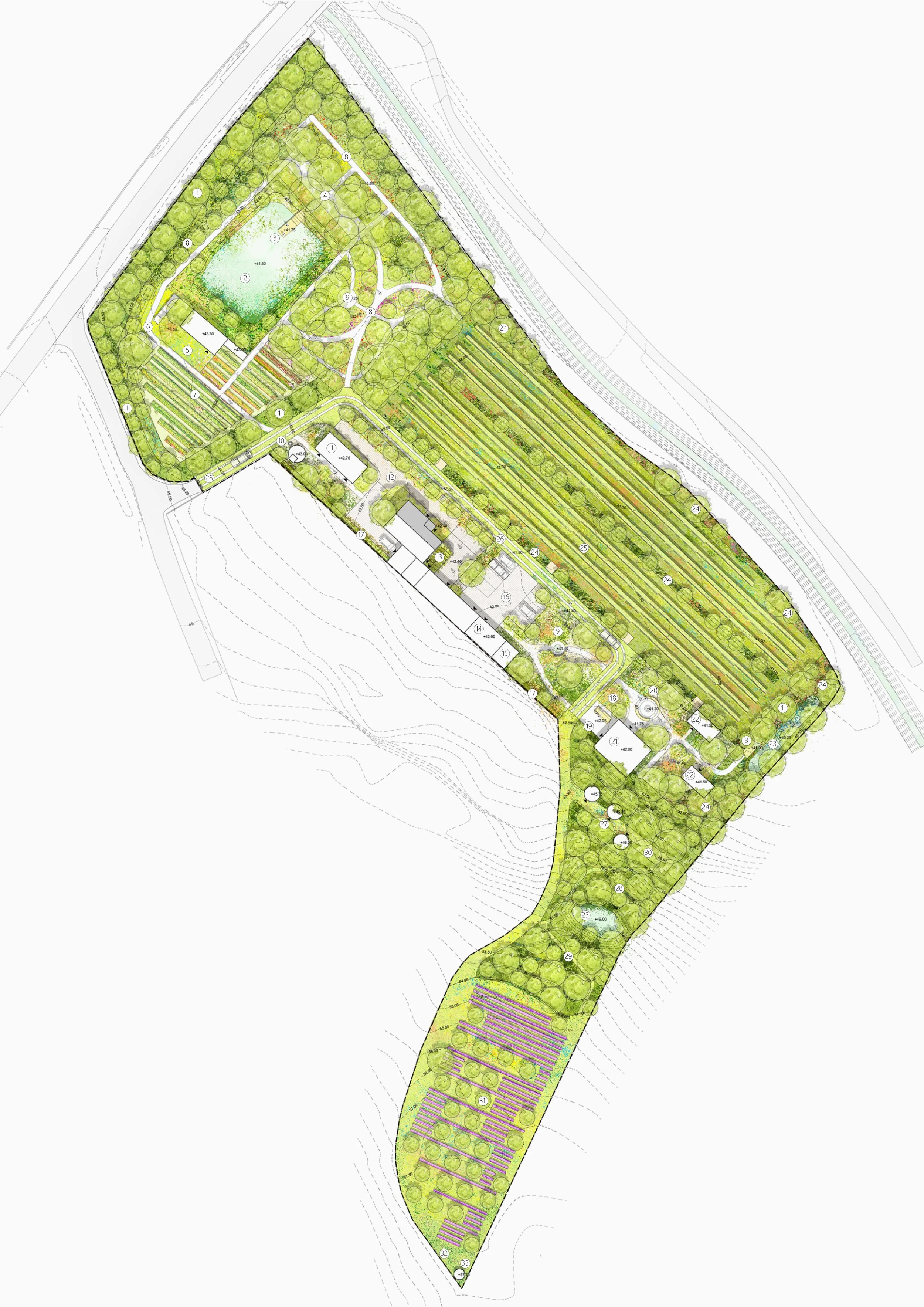
The main aim of this project was to establish a regenerative system for cultivating cash crops. The site would also be designed to function as a guest house / retreat, family home, and domestic productive landscape.
The proposal includes a new access road and car parking, camp ground, an agricultural extension with a greenhouse, three retreat buildings, and integrated water and waste systems. The cash crop systems follow agroecological best practices and include a restored alluvial perennial meadow and willow thickets with a vineyard, and olive / lavender silviculture. Domestic growing areas include a vegetable garden, aromatic herb garden, and a food forest.
These sit within a wider landscape of restored riparian ash woodland shelterbelts, escarpment cork oak woodland, a garrigue garden, wildflower meadows, and a system of wetlands for grey water treatment, together with three ponds for retention, irrigation and habitat. A network of footpaths link recreational nodes, including a natural swimming pond, boules court, seating niches, fire pit area, a hammock grove, and trellised terraces adjacent to the main residence.
Food Forest
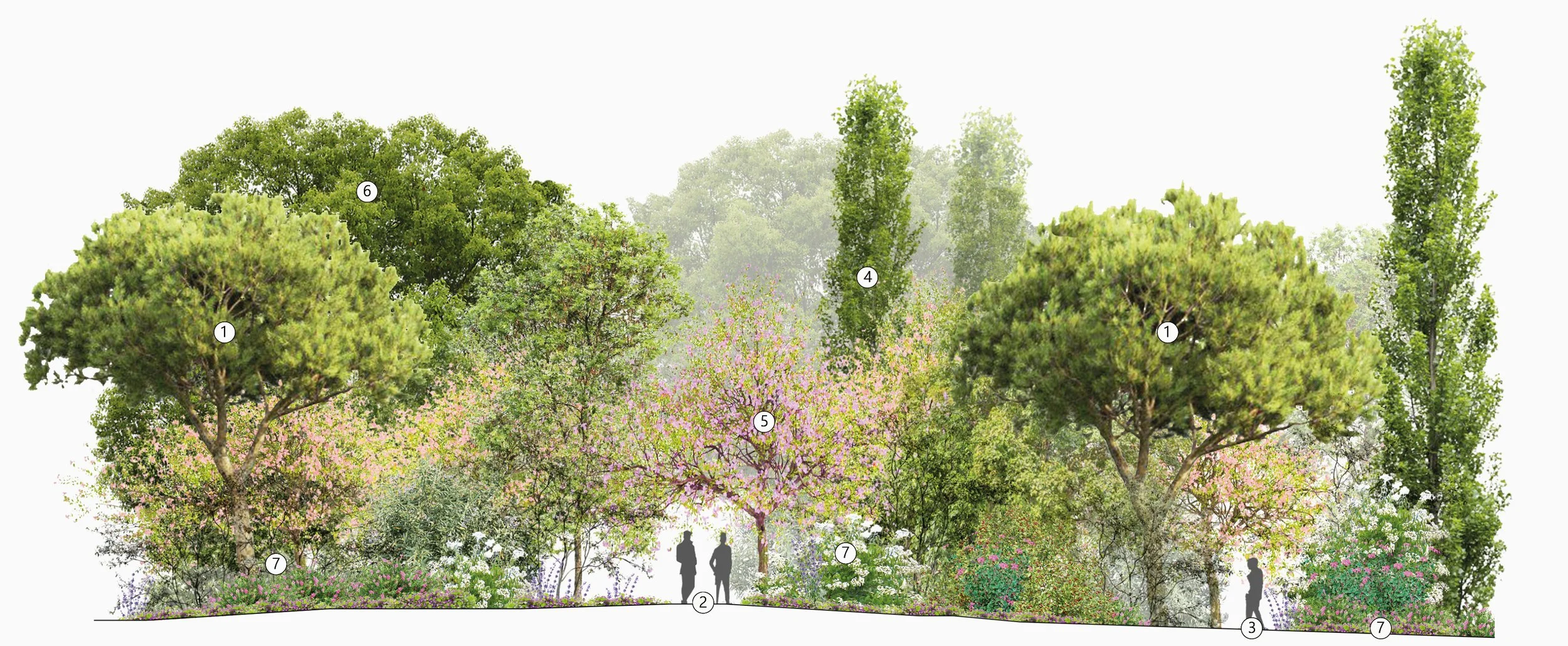
The goal behind the Food Forest was to create a dense, shaded, multi-strata woodland for the semi-wild cultivation of perennial crops. The food forest occupies an area of fertile alluvial clay loam soil with submesic conditions and a near neutral soil pH. These conditions allow for a high stem density and a wide variety of plant functional types.
The food forest is crossed by a main path that connects the access road to the boules area positioned within an existing grove of stone pines. Secondary paths branch out and meet at a central circular walled seating niche. This niche provides a comfortable area for resting in the shade and can provide a focal point within the forest for retreat activities. The matrix layer would be composed of native mat-forming species together with an understorey of shade tolerant megaphorbic vegetation dominated by Smyrnium olusatrum, intended to utilise excess soil nutrients.
Ponds
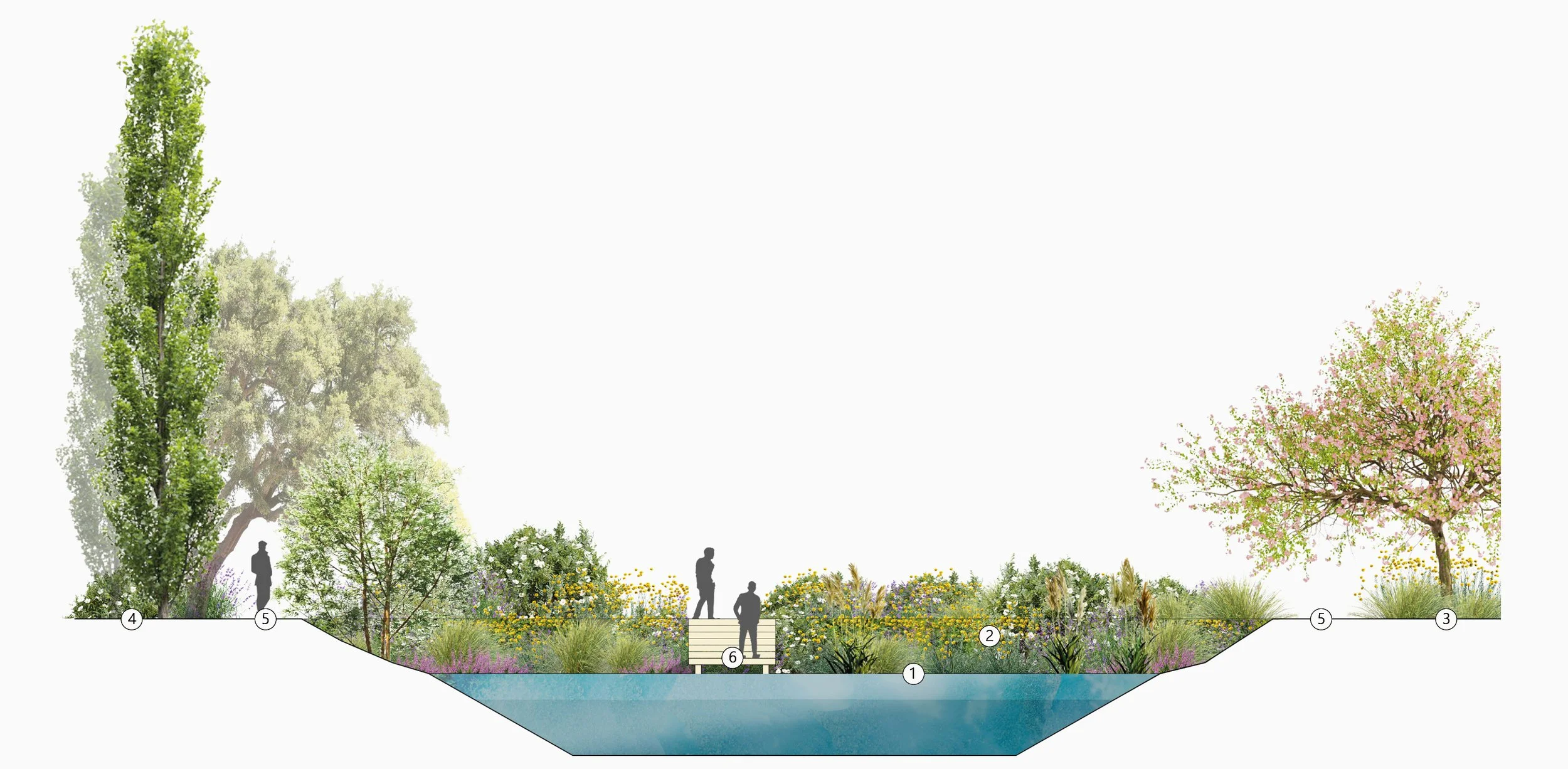
Pond Habitat is distributed across three areas: the main pond (west), the retention pond (east of the vineyard), and the irrigation pond on the olive grove slope.
The main pond would be lined with bentonite clay to hold a fixed summer water level, supporting seasonal swimming and a planted wetland margin of helophytic herbaceous perennials. Access is via a stepped timber pontoon from the northern embankment.
The retention pond captures vineyard and garrigue garden runoff, reducing winter waterlogging. A shaded seating niche along the northern edge offers a comfortable area to relax with views of the water.
The irrigation pond serves the olive / lavender system. An artificial depression within the slope, created from historic quarrying activities, would be partially infilled and graded for improved safety, with gently sloping edges to support aquatic shelf vegetation and habitat development, whilst holding winter run-off for irrigation use.
Vegetable Garden
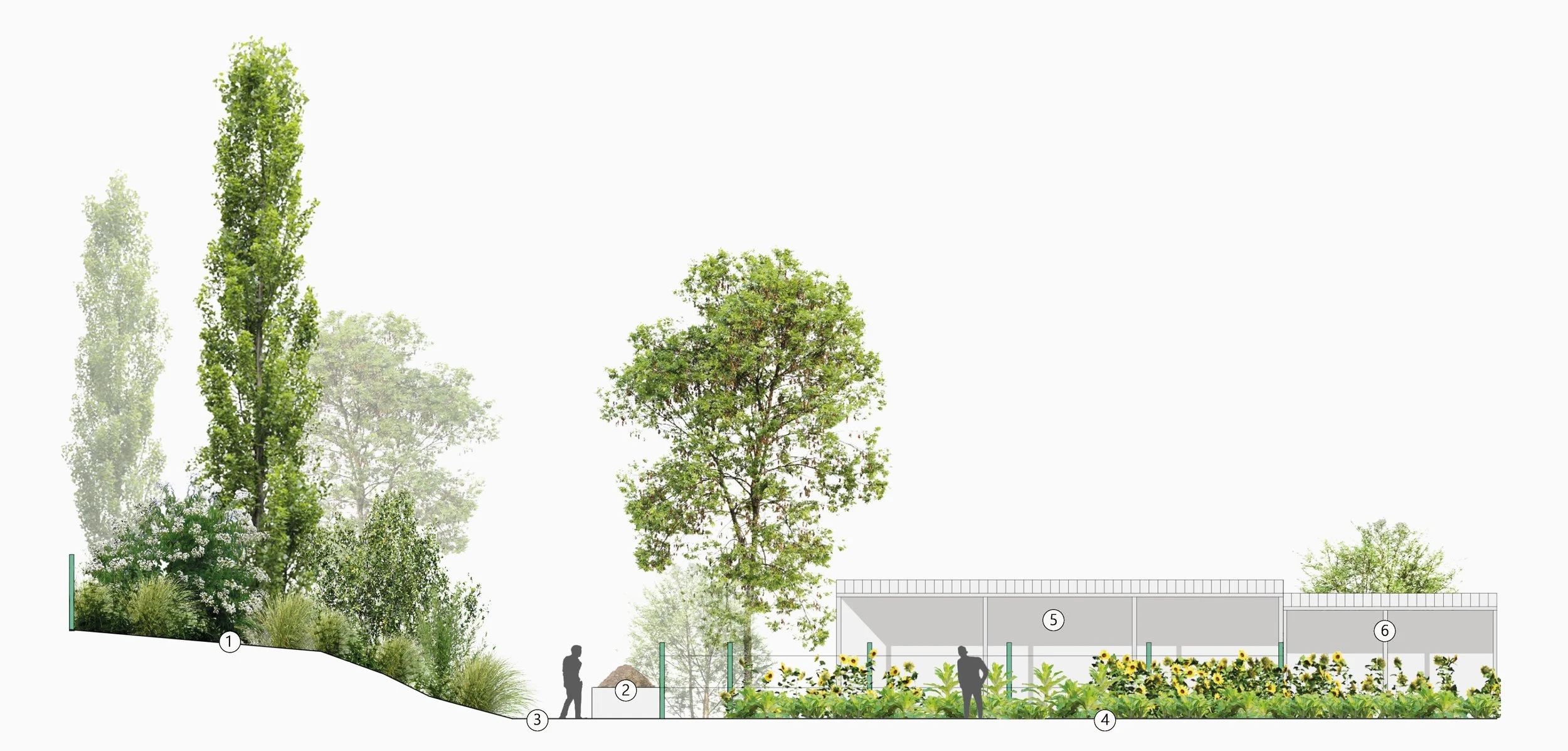
The Vegetable Garden and chicken coupe are positioned together, occupying flat fertile land, forming a hub for agricultural inputs, including the recycling of chicken guano, kitchen waste, and hay from the meadows for compost production. This consolidated layout supports efficient production, protected by an ash woodland shelterbelt, composed of species from the Irido foetidissimae-Fraxinetum angustifoliae commuity, positioned along the western property boundary.
Management of the garden would be organised around ridge and furrow no-till vegetable beds, positioned between native wildflower meadow alleys. Drainage is a priority as this area lies within a floodplain, occasionally receiving sheetflow from the main road beyond the property. Besides providing access, the alleys support drainage and provide habitat, forage, nectar, and pollen resources for beneficial and predatory insects.
Vineyard
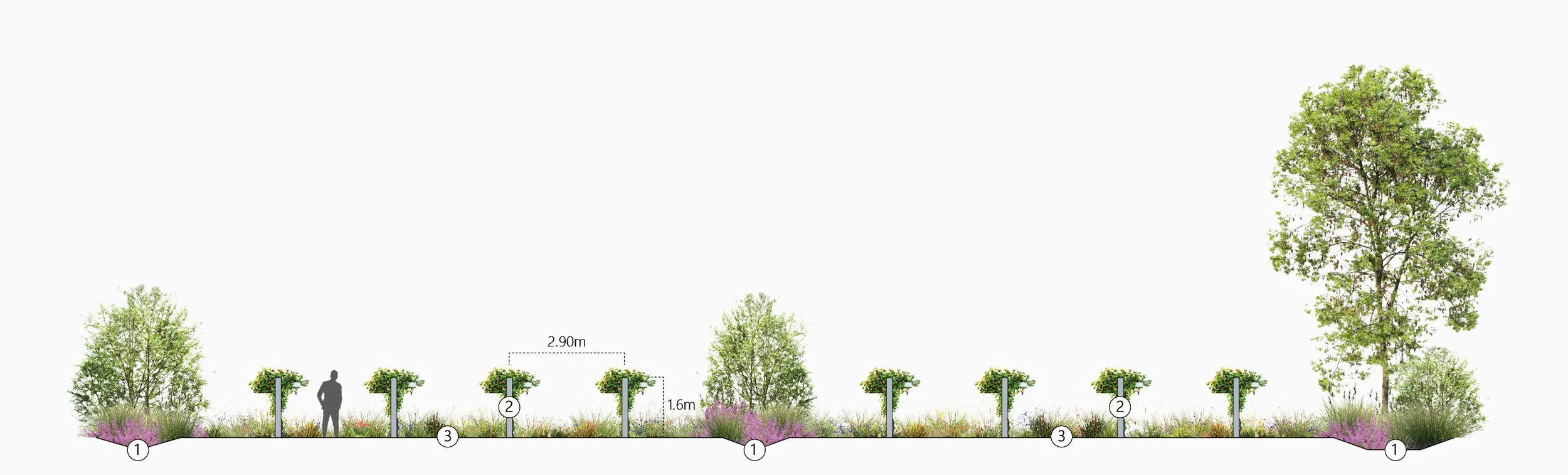
The Vineyard occupies flat alluvial clay-loam soils (Eutric Cambisols) with a neutral pH, located adjacent to the Rio da Fonte, ideal conditions for the cultivation of certain regional white wine varieties. Vineyard rows are proposed to run NW–SE, parallel to the river, to maximise the productive footprint. A single-curtain trellis system is proposed for improved airflow and efficient harvest, due to the humid conditions.
The layout consists of two vineyard plots intersected by three rain gardens. The rain garden plantings, informed by the local Salix alba community, function as shallow, vegetated swales that intercept winter runoff. Planted densely with an understorey of Juncus inflexus, their root zones support denitrifying bacteria, helping to strip excess nutrients before water reaches the adjacent river, reducing eutrophication risks.
The vines trellises sit within a diverse, dual-season perennial meadow composed of species from the Avenulo sulcata-Stipetum giganteae community. This ensures year-round ground cover, which reduces erosion and supports improved soil structure, whilst providing high quality pollinator and predatory insect habitat.
Garrigue Garden
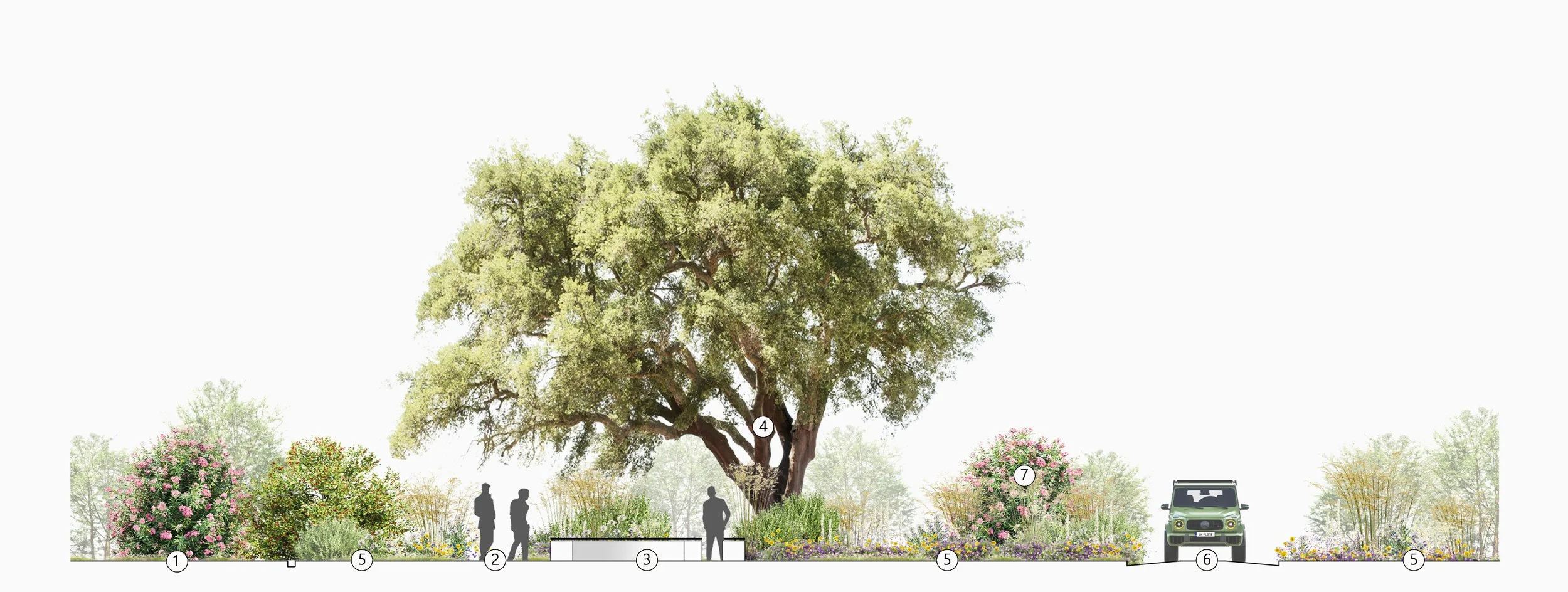
The Garrigue Garden runs parallel to the vineyard and forms a spine that anchors the existing and proposed buildings within the property. It responds to the need for improved drainage around the residence, whilst providing a sensory garden for retreat guests.
Circulation follows a primary paved path, while open gravel between planting islands allows flexible cross-movement and informal exploration, reinforcing a naturalistic garden character. Planting focuses on drought-tolerant shrubs, subshrubs, bunchgrasses, and geophytes from the Erico-Quercetum lusitanicae and Lavandulo luisieri-Ulicetum jussiaei garrigue and maquis communities, with an emphasis on evergreen species for year-round structural interest.
Cork Oak Woodland
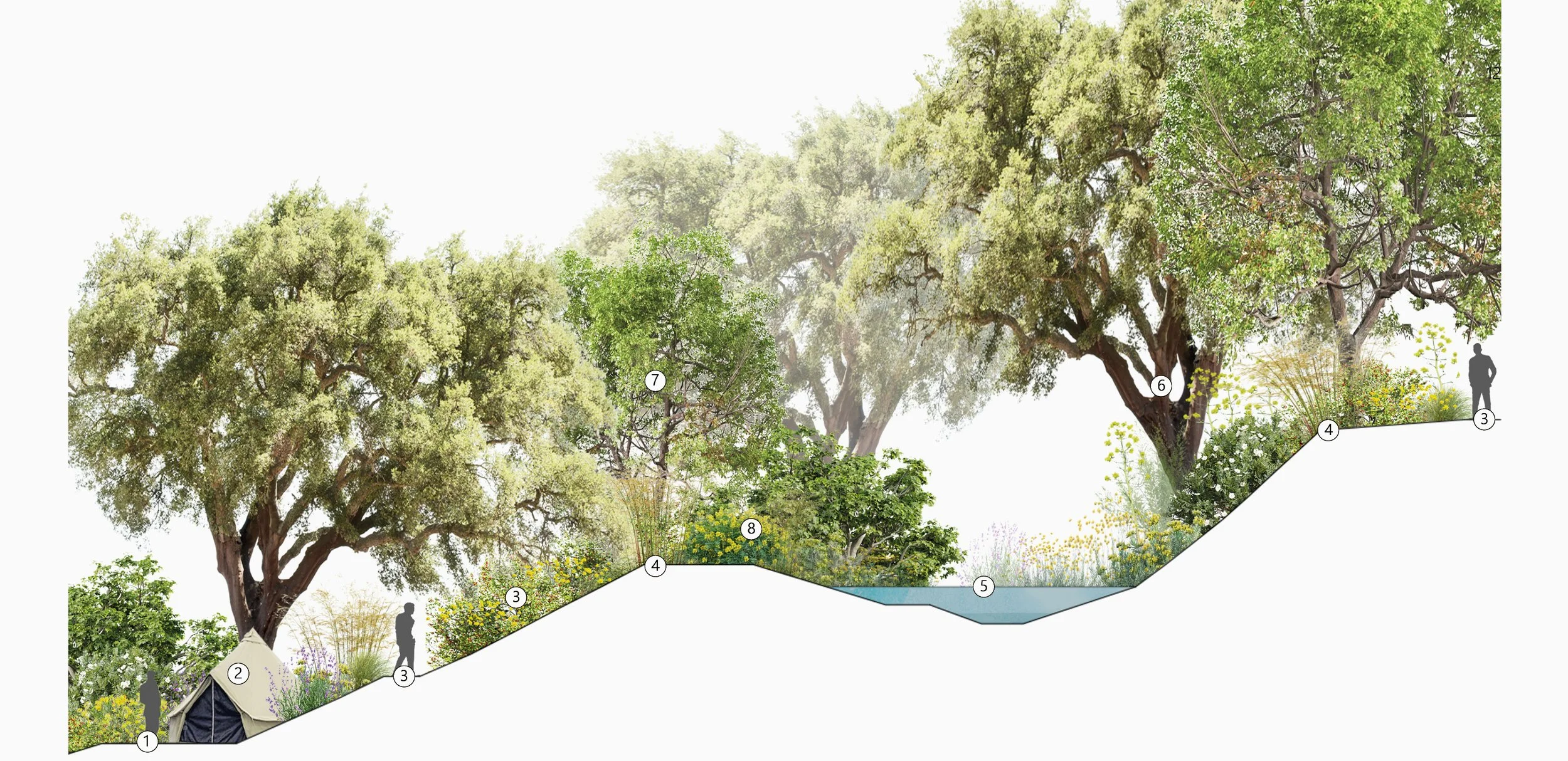
The Cork Oak Woodland would see the restoration of the full climax stage of the Asparago aphylli–Quercetum suberis sigmetum. Although fragments of late-successional vegetation remain, the slope is currently degraded and species-poor.
The woodland occupies a steep, dry, northeast aspect. To support planting establishment, improve infiltration, and reduce erosion, contour strips of the deep-rooted bunchgrass Stipa gigantea are proposed to stabilise soils during early stages of regeneration.
Three glamping yurts would sit along an existing earthen terrace positioned midway up the woodland slope, placing guests beneath the cork oak canopy for an immersive retreat experience, whilst taking advantage of the abundant summer shade.
Olive / Lavender Silviculture
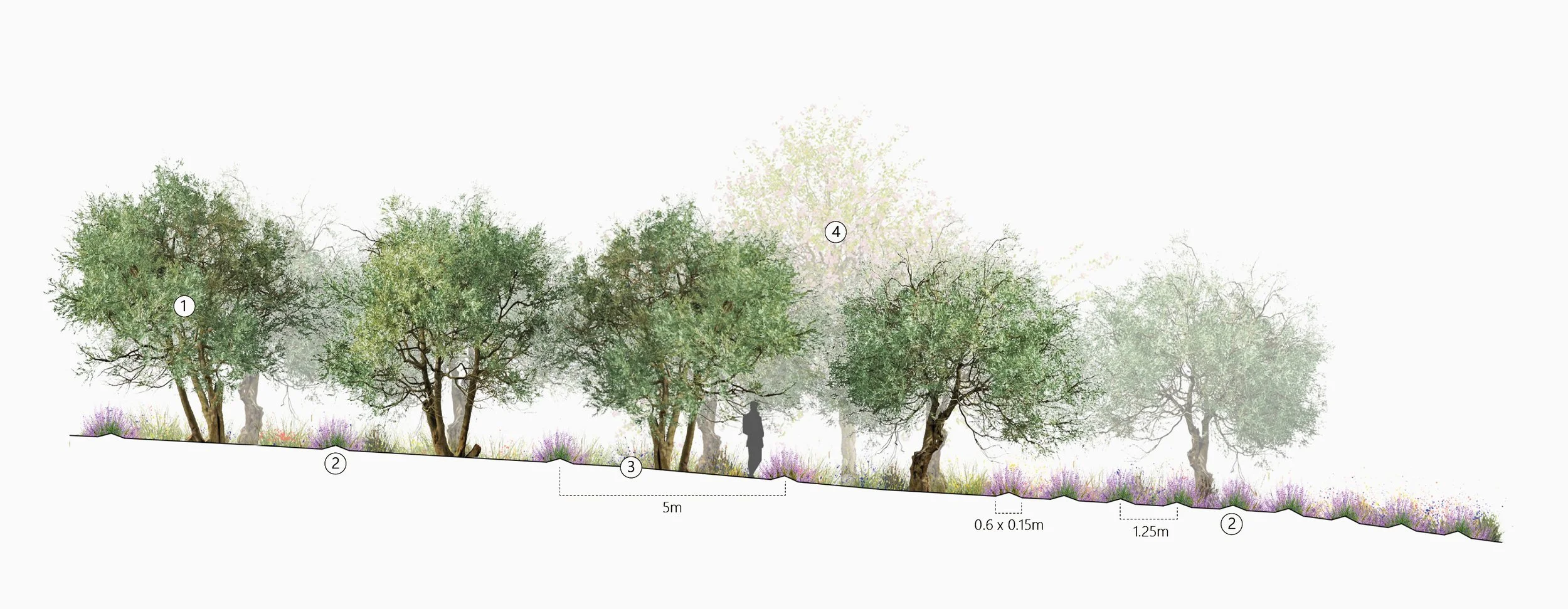
The existing Olive Orchard would be regenerated through improved soil management, pruning, and irrigation. A complementary understory layer of English lavender would be integrated within the existing tree grid. To support lavender production, soils would be amended to a target pH of ~7.0.
The lavender rows would be organised around a ridge and furrow system following a keyline geometry. A xeric perennial meadow would occupy the walkways between lavender rows, composed of species from the Avenulo sulcata-Stipetum giganteae community. These species would be specifically selected to support infiltration and reduce erosion, whilst reducing competition for summer soil moisture due to the meadow having a strong spring phenology.
Timeline 2024
Location Aveiras de Cima, Lisbon
Site area 1.5 hectares
Project Type Hospitality / Agriculture / Private residence